
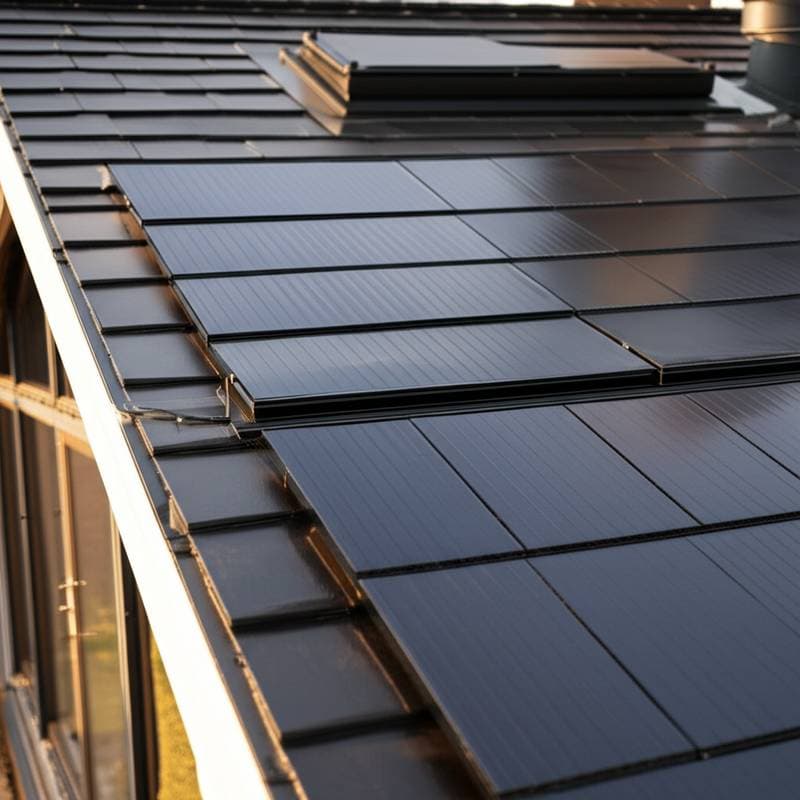
2025 Solar Shingles: Uncovering Hidden Warranty Costs
Philadelphia homeowners increasingly consider solar shingles as a dual-purpose upgrade that enhances roof aesthetics while generating electricity. The concept appears straightforward: substitute standard shingles with photovoltaic versions to produce power seamlessly. However, marketing gloss often conceals financial pitfalls embedded in warranty details. Grasping these elements before committing safeguards your investment, roof integrity, and household safety.
Appeal of Solar Shingles
Solar shingles integrate directly into the roofline, avoiding the bulky appearance of rack-mounted panels. This design suits historic districts or communities with strict aesthetic guidelines from homeowner associations. Manufacturers promote them as a unified roof-and-power solution. In reality, merging roofing materials with electrical components introduces shared obligations among manufacturers, roofers, and solar specialists, setting the stage for concealed expenses.
Origins of Warranty Overlaps
Solar shingle installations involve multiple warranty categories:
- Roofing material protection from the shingle producer.
- Energy output guarantee from the photovoltaic supplier.
- Installation quality assurance from the contractor.
- Component warranties for inverters and monitoring devices from respective vendors.
These warranties feature distinct conditions, limitations, and procedures. Homeowners bear the responsibility of identifying the appropriate entity for each concern. A leak near the shingle array might prompt the roofer to defer to the electrician, while reduced output could lead the solar provider to attribute it to roofing flaws. Without clear causation, individuals often cover diagnostic and repair fees personally.
Integrated System Vulnerabilities
By combining waterproofing with electrical pathways, solar shingles heighten risks to both functions upon failure. Key threats include:
- Moisture entry at cable entries or sealant junctions.
- Thermal buildup from faulty connections beneath shingles.
- Substrate weakening due to retained heat.
- Ignition potential from inadequately insulated direct current lines.
Upon detecting burnt odors or stained roofing areas, deactivate the system via the primary breaker and summon a certified electrician without delay. Avoid manipulating shingles, as this demands expert equipment to prevent electrocution or structural harm.
Navigating Coverage Limitations
Warranties frequently apply varying durations to components. Energy warranties may assure 80 percent output over decades, whereas material protections span shorter periods. A post-expiration leak in an active power-producing roof could necessitate complete replacement at owner expense. Certain providers mandate certified technicians for interventions, voiding coverage otherwise and narrowing contractor options while elevating fees.
Labor provisions represent another subtle charge. Warranties typically reimburse parts alone, excluding disassembly and reassembly efforts. Accessing solar shingles demands circuit isolation, performance verification, and trade coordination, multiplying costs beyond conventional roofing tasks.
Compliance with Codes and Permits
In Philadelphia, solar shingle projects adhere to structural and electrical regulations. Local authorities conduct distinct reviews for roofing stability and circuit safety. Warranty-related fixes might trigger re-inspections, incurring additional fees and timelines. Provisions may insist on current code adherence, complicating upkeep for legacy setups.
Secure duplicates of all permitted approvals and verifications from your installer. Store these alongside warranty files, as absent records hinder legitimate claims.
Solar Shingles Versus Conventional Panels
Solar shingles suit select architectures, yet alternatives may prove superior. Weigh these aspects:
- Power density: Shingles yield lower generation per area than panels.
- Service ease: Panels permit isolated swaps; shingles demand broader disruption.
- Thermal management: Elevated panels facilitate ventilation, mitigating heat; flush shingles retain it.
- Upkeep needs: Shingle care requires proprietary instruments.
Aesthetic advantages notwithstanding, cumulative ownership expenses frequently surpass those of detached solar installations. Scarce qualified service providers further inflate ongoing costs.
Scrutinizing Warranty Details
Examine definitions and caveats meticulously prior to agreement. Focus on:
- "Limited lifetime" designations, which may restrict to original owners with diminished transfers.
- Degradation specifications, benchmarked against third-party evaluations.
- Exclusions for natural events like storms, potentially overlapping with insurance denials.
- Certification mandates limiting service to approved personnel.
Request written clarification from the provider on claim-related disassembly and reassembly funding. Certain entities implicitly assign these to owners despite coverage.
Calculating True Lifetime Expenses
Aggregate these to forecast accurately:
- Dual-trade setup labor.
- Uncovered repair workforce.
- Routine checks and decontamination to sustain validity.
- Periodic circuit assessments by experts.
- Selective renewals for inconsistent performance.
Frequently, aggregate outlays surpass efficient panel arrays atop existing roofs. Projections of 25-year cost-free energy overlook essential preservation obligations.
Routine Professional Assessments
Engage a certified electrician biennially for the electrical components, evaluating:
- Fastener tightness and sheath integrity.
- Fault interrupter functionality.
- Bonding reliability and overvoltage safeguards.
- Converter performance metrics.
Simultaneously, a roofer examines seals, membranes, and dampness defenses. Integrated visual and electrical diagnostics yield comprehensive insights, though subsurface wiring may evade surface scrutiny.
Essential Pre-Purchase Inquiries
Employ this list:
- How does system efficiency stack against panels?
- Which party addresses penetration-induced leaks?
- What provisions govern replacement labor?
- Which records preserve warranty status?
- Do services demand brand-specific credentials?
Credible providers furnish precise, documented responses. Shun those dependent on leaflets or assurances.
Indicators Requiring Expert Intervention
Halt self-diagnosis upon observing:
- Intermittent illumination or circuit interruptions tied to solar.
- Fault notifications or device malfunctions.
- Infiltration adjacent to arrays.
- Compromised pathways or connector decay.
Professionals diagnose securely, pinpoint issues, and compile evidence for reimbursements. Refrain from probing energized solar circuits.
Advancing Your Solar Shingle Project
Prospective buyers compile specifications, warranty exemplars, and regional case studies. Confirm installer credentials in roofing and electrics. Consult authorities on protocols. Organize documents systematically.
Current users timetable periodic evaluations. Clear accumulations softly with water and bristles. Log generation via applications monthly. Promptly notify providers of anomalies within claim periods to maximize protections.