
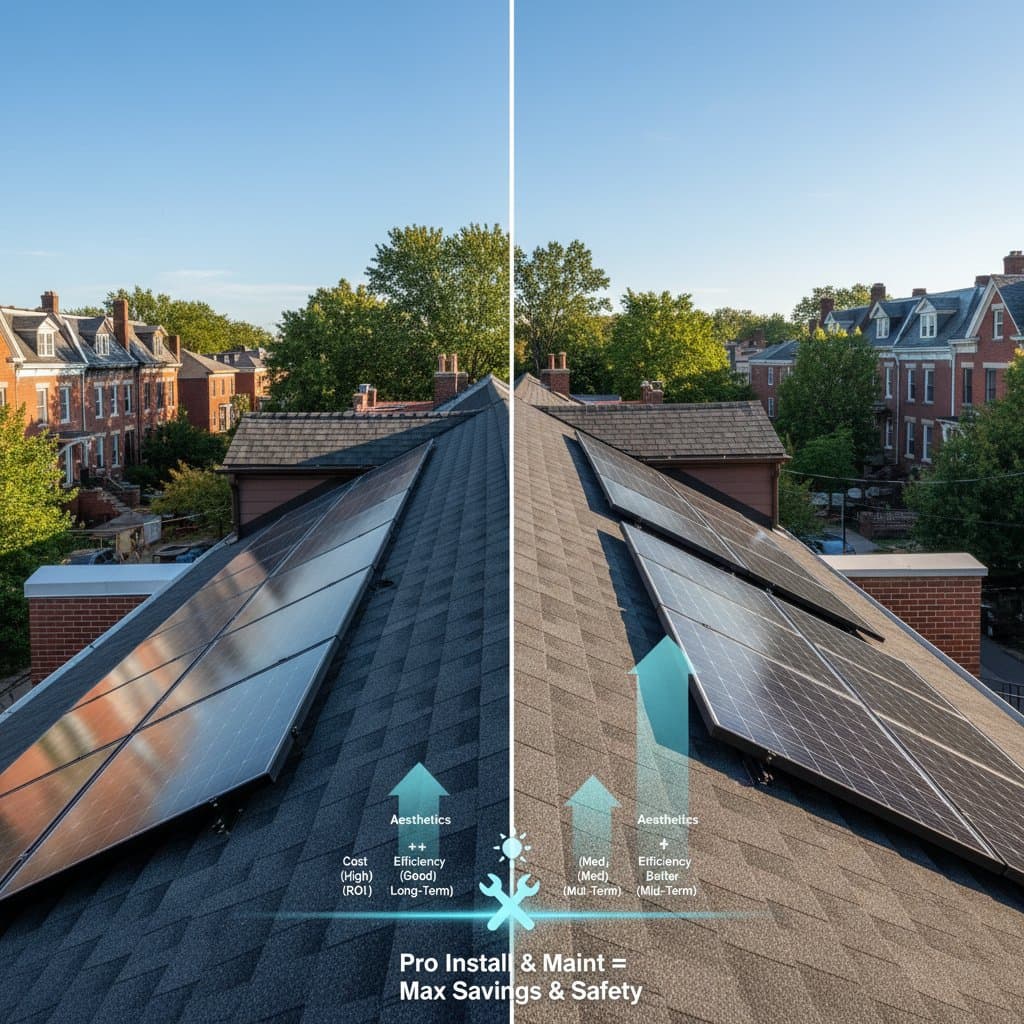
Solar Shingles vs Traditional Panels: 2025 ROI Analysis
Philadelphia homeowners increasingly consider solar options that enhance both energy production and property appearance. Solar shingles integrate photovoltaic technology directly into roofing materials, offering a seamless alternative to conventional rack-mounted panels. This analysis examines return on investment for 2025, factoring in costs, efficiency, safety, and maintenance to guide informed decisions.
Factors such as installation expertise, existing roof condition, and local energy rates significantly influence financial outcomes. Professional assessment ensures compliance with building codes and optimizes performance. Understanding these elements helps homeowners select the system that aligns with their goals for sustainability and savings.
Functionality of Solar Shingles
Solar shingles incorporate photovoltaic cells within durable roofing components. Each unit captures sunlight to generate electricity while providing weather protection. Interconnected through concealed wiring pathways, the shingles feed power to a central inverter that transforms direct current into usable alternating current for household appliances.
In contrast to traditional panels, solar shingles form part of the roof structure, eliminating the need for separate mounting racks. This design simplifies the overall appearance but demands precise installation to maintain waterproofing and structural integrity. Installers must align shingles carefully to avoid gaps that could lead to leaks.
Essential elements of a solar shingle system include:
- Photovoltaic shingles equipped with built-in electrical connectors
- Specialized underlayment designed to withstand elevated temperatures and humidity
- String inverters or microinverters to manage power conversion
- Weather-resistant junction boxes for secure connections
Proper installation adheres to roofing and electrical standards, including resistance to high winds and effective sealing against moisture. Homeowners benefit from systems that perform reliably over decades when maintained by certified professionals.
ROI Comparison: Solar Shingles and Traditional Panels
Return on investment hinges on quantifiable aspects that vary by system type.
-
Cost per watt of installed capacity
Solar shingles command a premium due to their integrated nature and the specialized labor required for roofing integration. Traditional panels generally offer lower upfront costs per watt, as installation focuses primarily on mounting rather than full roof replacement. -
Efficiency in energy generation
Traditional panels achieve higher output per square foot through optimal tilt angles that maximize solar exposure. Solar shingles, positioned flat against the roof, may produce 10 to 20 percent less energy, particularly on roofs with shallow pitches or partial shading. -
Integration with roof replacement needs
For homes requiring a new roof, solar shingles consolidate expenses, potentially reducing overall outlay by combining solar and roofing projects. This synergy shortens payback periods compared to adding panels to an existing, functional roof. -
Expected durability and service life
Solar shingles match the longevity of high-quality asphalt or composite roofs, typically 25 to 30 years. Traditional panels often endure 30 to 40 years, though underlying roof repairs may arise independently, adding future costs.
Practical ROI Illustration
Consider a Philadelphia residence with a 1,500-square-foot roof suitable for solar installation. A traditional panel array might generate 10,000 kilowatt-hours annually, offsetting 80 percent of typical household consumption at current utility rates of 16 cents per kilowatt-hour.
A comparable solar shingle setup could produce 8,000 to 9,000 kilowatt-hours, reflecting reduced efficiency from flush mounting. Initial costs for shingles might reach 4.50 dollars per watt, versus 3.00 dollars for panels, but incentives like the federal solar tax credit reduce effective expenses by 30 percent. Over 25 years, both systems yield similar net returns when factoring in avoided roofing costs and escalating energy prices projected for 2025.
Homeowners in areas with net metering policies recover value faster, as excess generation credits lower bills. Pairing either system with energy-efficient appliances amplifies savings.
Aesthetic and Structural Considerations
Solar shingles merge seamlessly with the roof surface, preserving architectural harmony in neighborhoods governed by strict design guidelines, such as Philadelphia's historic districts. Traditional panels protrude above the roofline, creating a more utilitarian look that suits modern or rural settings.
Ideal scenarios for solar shingles:
- Roofs oriented south or southwest for optimal sun exposure
- Properties where visual uniformity enhances property value
- Situations involving imminent roof replacement to streamline projects
Preferred applications for traditional panels:
- Roofs in excellent condition with substantial remaining lifespan
- Priorities centered on peak energy yield over appearance
- Designs allowing easy access for cleaning and repairs
Both options require evaluation of roof load capacity. Solar shingles spread weight uniformly, minimizing stress on framing. Panels concentrate loads at racking points, often necessitating engineering assessments to confirm structural adequacy. Local building permits mandate these reviews to prevent issues like sagging or failure during storms.
Factors Shaping Long-Term ROI
Realistic projections account for dynamic influences on profitability.
-
Utility rate fluctuations. Projections for 2025 indicate a 3 to 5 percent annual increase in Philadelphia electricity costs, accelerating payback for solar investments.
-
Available incentives. The federal Investment Tax Credit covers 30 percent of qualified expenses, while Pennsylvania offers additional rebates for residential systems. Local programs may further offset costs through property tax exemptions.
-
Maintenance expenses. Solar shingles demand coordinated roofing and electrical work for repairs, potentially raising costs. Panels allow isolated fixes, such as replacing a single module without disturbing the entire roof.
-
Performance degradation. Both technologies experience 0.5 to 1 percent annual output decline. Warranties from manufacturers guarantee at least 80 percent efficiency after 25 years, provided installations follow best practices.
Integrating battery storage enhances ROI by capturing daytime surplus for nighttime use, reducing reliance on peak-rate grid power. This setup also bolsters resilience against outages common in urban areas.
Maintenance and Performance Monitoring
Regular upkeep preserves system efficiency and safety. Engage certified professionals for biennial inspections that cover:
- Tightening of electrical connections to prevent arcing
- Examination of seals around penetrations to block water entry
- Validation of grounding systems and ground-fault circuit interrupter functionality
Homeowners can monitor output via inverter apps, tracking daily production against weather patterns. Prompt attention to underperformance, such as from bird debris or shading, maintains optimal returns. Insurance riders for solar equipment protect against damage from hail or fallen branches.
Steps to Select and Implement Your Solar Solution
Begin with a site assessment by a NABCEP-certified installer to evaluate roof suitability and energy needs. Compare quotes from at least three providers, focusing on warranties, financing options, and projected savings based on 2025 rate forecasts.
Prioritize systems that balance upfront investment with long-term benefits. Whether choosing shingles for elegance or panels for efficiency, quality installation ensures decades of reliable, cost-saving performance. Philadelphia's sunny climate and supportive policies position solar as a smart path to energy independence.